
The New Server Survival Guide
Everything the experienced servers at your restaurant know — that nobody bothered to tell you when you started.
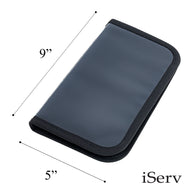 Server Book
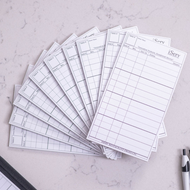 Order Pads
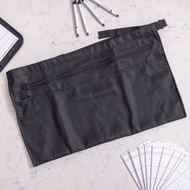 Server Apron
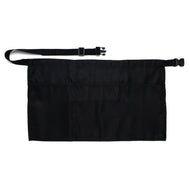 3-Pocket Apron
Your first few months on the floor will teach you more about people, pressure, and money management than almost anything else in life. Here is how to make sure they teach you the right lessons.
Every experienced server remembers their early shifts — the chaos of a Saturday dinner rush, the anxiety of a large party, the sick feeling when a table signals for the check and you realize you have no idea where you put the receipt. It is a rite of passage. But it does not have to last as long as it did for most of us.
The truth is, most new server struggles come down to three things: no system, no tools, and no one telling you that these two things are the actual job. The food comes from the kitchen. Your job is to run the floor — and to run it like a professional. Here is your head start.
The 7 things you need to master in your first 30 days
-
1
Learn the menu before you step on the floor
Not "kind of" learn it — actually know it. Know the allergens, the prep time for your most popular items, what can be modified and what can't. Guests trust servers who answer questions without hesitating. That trust becomes tips.
-
2
Build a banking system from day one
Know exactly where your small bills live. Know where your large bills are. Make change without asking your guests to wait. New servers who learn this habit early look like they have been doing this for years — because the guests can see the difference.
-
3
Use a consistent note-taking system for every table
Whether you use the pivot system, seat numbers, or descriptions — pick one and stick to it. Inconsistent notes lead to wrong-table food, split check nightmares, and embarrassing moments in front of your guests. Your order pad is your anchor.
-
4
Greet every table within 60 seconds
You do not have to be ready to take their order. You just need to acknowledge them and set an expectation. Guests who feel seen are patient. Guests who feel ignored become the table that signals the manager at minute three.
-
5
Never walk the floor empty-handed
Every trip to the kitchen is also a trip back with something. Every trip back to the floor is also a scan of your section. The servers who cover the most ground efficiently are the ones who can run five tables without looking like they are running five tables.
-
6
Check back two bites in — not two minutes in
The check-back exists to catch problems before they become complaints. Do it when guests have tasted the food but are not yet mid-conversation. Too early and they have not tried anything. Too late and the complaint has already formed. Timing is everything.
-
7
Invest in your own equipment
The house apron from the back closet, the borrowed pen that keeps dying, the scrap paper for notes — none of this says professional. Professional servers own their tools. It changes how you carry yourself, and it changes how guests see you.
Your starter kit for the first day
Before you walk onto the floor, you need three things: a reliable way to carry your cash, a system for taking orders, and a place to put everything. This is not about spending a lot of money. It is about having the right gear so the job feels manageable instead of chaotic.
iServ Server Book
New servers who start with the right server book build good habits immediately. The iServ EZ Banking System teaches you cash management from your very first shift. Includes a free order pad.
Get the Server Book →iServ Order Pads — 10 Pack
Designed for exactly the challenge you face as a new server: keeping large party orders straight. The clean layout means less confusion and fewer mistakes, even when your section is packed.
Get the Order Pads →
iServ 5-Pocket Clip-On Apron
Five organized pockets and a zippered phone pouch. The clip-on design means no fumbling with ties at the start of a shift. Everything has a place, and your hands stay free.
Get the Apron →The mistake almost every new server makes
New servers almost universally make the same error: they focus on individual tables instead of the entire section. You walk to table 12, handle table 12, walk back to the kitchen, return to table 12. Meanwhile, table 14 has been waiting for a refill for six minutes, and table 15 just sat down and feels invisible.
This shift in thinking — from "I am serving table 12" to "I am managing my section" — is the single biggest mental leap new servers make. The ones who get there quickly are the ones who make real money.
Your pre-shift checklist
Before every shift, confirm you have:
- Server book stocked with fresh order pads
- Starting bank organized — small bills accessible, large bills secured
- Two working pens (one backup, always)
- Clean apron with all pockets checked and cleared from last shift
- Today's specials memorized — price, description, any common questions
- Any 86'd items noted so you never recommend something unavailable
- Section assignment confirmed and tables checked for cleanliness
Servers who do a proper pre-shift setup walk onto the floor calm. Servers who skip it spend the first 30 minutes of the rush playing catch-up. The pre-shift takes four minutes. It is worth four minutes.
Your first year on the floor will be one of the most demanding — and most educational — experiences of your working life. The servers who thrive are not necessarily the most naturally charming. They are the most organized, the most consistent, and the most prepared. Give yourself every advantage from the start.